 Amazon.com Review
Amazon Best Books of the Month, January 2010: It’s back. With those words Tim and Jane Farnsworth reenter a nightmare they know so intimately it needs no other description. "It" may not be found among an insurance company’s diagnostic codes, but the Farnsworths, a couple made wealthy by Tim’s single-mindedly successful legal practice, know it too well: Tim’s compulsion, at any random moment of the day or night, to set out walking for hours at a time until he collapses in exhaustion. They’ve survived two bouts of this inexplicable illness, which began as mysteriously as they ended, and now, as Joshua Ferris’s second novel, The Unnamed, opens, they are beset by a third. Ferris’s first book, Then We Came to the End, was one of the freshest, most acclaimed fiction debuts of the decade, but he’s followed it not with an imitation or extension but with something thrillingly different. Like Tim possessed in one of his perambulatory vectors, Ferris follows his character’s condition as far as it leads him, far beyond where logic and loyalty usually take our lives, but always treats it with empathy, grace, and imagination. His language is as exact and poetic as his premise is fantastic, and by the story’s end you feel the title refers not only to his hero’s strange and solitary disease but also to those elemental but equally inexplicable forces that bind us together through the most difficult turns of our fated lives. --Tom Nissley
From Publishers Weekly
Starred Review. In Ferris’s remarkable second novel (after Then We Came to the End), a life of privilege comes to ruin as a result of a strange and mysterious illness. Attorney Tim Farnsworth thought he had recovered from a disorder that compels him to walk to the point of exhaustion. But now his walking disease has returned and shows no sign of going into remission. His wife, Jane, supportive beyond measure, does everything she can to keep Tim safe during his walks, including making routine midnight trips to pick him up. As the disorder takes increasing control over their lives, however, the sacrifices they make for each other drive them further apart. Ferris manages to inject a bizarre whimsy into a devastatingly sad story, with each of Tim’s outings revealing a new aspect of his marriage. The novel’s circular aspects, with would-be happy endings spiraling back into chaos and then descending further, integrate Ferris’s themes of family, sickness, and the uncertain division between body and mind into a vastly satisfying and original book. (Jan.)
Copyright © Reed Business Information, a division of Reed Elsevier Inc. All rights reserved.
Amazon.com Review
Amazon Best Books of the Month, January 2010: It’s back. With those words Tim and Jane Farnsworth reenter a nightmare they know so intimately it needs no other description. "It" may not be found among an insurance company’s diagnostic codes, but the Farnsworths, a couple made wealthy by Tim’s single-mindedly successful legal practice, know it too well: Tim’s compulsion, at any random moment of the day or night, to set out walking for hours at a time until he collapses in exhaustion. They’ve survived two bouts of this inexplicable illness, which began as mysteriously as they ended, and now, as Joshua Ferris’s second novel, The Unnamed, opens, they are beset by a third. Ferris’s first book, Then We Came to the End, was one of the freshest, most acclaimed fiction debuts of the decade, but he’s followed it not with an imitation or extension but with something thrillingly different. Like Tim possessed in one of his perambulatory vectors, Ferris follows his character’s condition as far as it leads him, far beyond where logic and loyalty usually take our lives, but always treats it with empathy, grace, and imagination. His language is as exact and poetic as his premise is fantastic, and by the story’s end you feel the title refers not only to his hero’s strange and solitary disease but also to those elemental but equally inexplicable forces that bind us together through the most difficult turns of our fated lives. --Tom Nissley
From Publishers Weekly
Starred Review. In Ferris’s remarkable second novel (after Then We Came to the End), a life of privilege comes to ruin as a result of a strange and mysterious illness. Attorney Tim Farnsworth thought he had recovered from a disorder that compels him to walk to the point of exhaustion. But now his walking disease has returned and shows no sign of going into remission. His wife, Jane, supportive beyond measure, does everything she can to keep Tim safe during his walks, including making routine midnight trips to pick him up. As the disorder takes increasing control over their lives, however, the sacrifices they make for each other drive them further apart. Ferris manages to inject a bizarre whimsy into a devastatingly sad story, with each of Tim’s outings revealing a new aspect of his marriage. The novel’s circular aspects, with would-be happy endings spiraling back into chaos and then descending further, integrate Ferris’s themes of family, sickness, and the uncertain division between body and mind into a vastly satisfying and original book. (Jan.)
Copyright © Reed Business Information, a division of Reed Elsevier Inc. All rights reserved. The Unnamed [Hardcover]
Amazon.com Review
Amazon Best Books of the Month, January 2010: It’s back. With those words Tim and Jane Farnsworth reenter a nightmare they know so intimately it needs no other description. "It" may not be found among an insurance company’s diagnostic codes, but the Farnsworths, a couple made wealthy by Tim’s single-mindedly successful legal practice, know it too well: Tim’s compulsion, at any random moment of the day or night, to set out walking for hours at a time until he collapses in exhaustion. They’ve survived two bouts of this inexplicable illness, which began as mysteriously as they ended, and now, as Joshua Ferris’s second novel, The Unnamed, opens, they are beset by a third. Ferris’s first book, Then We Came to the End, was one of the freshest, most acclaimed fiction debuts of the decade, but he’s followed it not with an imitation or extension but with something thrillingly different. Like Tim possessed in one of his perambulatory vectors, Ferris follows his character’s condition as far as it leads him, far beyond where logic and loyalty usually take our lives, but always treats it with empathy, grace, and imagination. His language is as exact and poetic as his premise is fantastic, and by the story’s end you feel the title refers not only to his hero’s strange and solitary disease but also to those elemental but equally inexplicable forces that bind us together through the most difficult turns of our fated lives. --Tom Nissley
From Publishers Weekly
Starred Review. In Ferris’s remarkable second novel (after Then We Came to the End), a life of privilege comes to ruin as a result of a strange and mysterious illness. Attorney Tim Farnsworth thought he had recovered from a disorder that compels him to walk to the point of exhaustion. But now his walking disease has returned and shows no sign of going into remission. His wife, Jane, supportive beyond measure, does everything she can to keep Tim safe during his walks, including making routine midnight trips to pick him up. As the disorder takes increasing control over their lives, however, the sacrifices they make for each other drive them further apart. Ferris manages to inject a bizarre whimsy into a devastatingly sad story, with each of Tim’s outings revealing a new aspect of his marriage. The novel’s circular aspects, with would-be happy endings spiraling back into chaos and then descending further, integrate Ferris’s themes of family, sickness, and the uncertain division between body and mind into a vastly satisfying and original book. (Jan.)
Copyright © Reed Business Information, a division of Reed Elsevier Inc. All rights reserved. 
Where the God of Love Hangs Out: Fiction [Hardcover]
 From Publishers Weekly Bloom’s latest collection (after novel Away) looks at love in many forms through a keenly perceptive lens. Two sets of stories that read much like novellas form the book’s soul; the first of which revolves around two couples-William and Isabel, Clare and Charles-and begins with Clare and William falling into an affair that endures divorces, remarriage and illness. Bloom has an unsettling insight into her character’s minds: Clare’s self-disgust is often reflected in her thoughts about William, demonstrating the complexity of their attraction as their comfort with each other grows, until she finally accepts the beauty of what they have-albeit too late. The second set of stories, featuring Lionel and Julia, is more complicated; the death of Lionel’s father propels Lionel and Julia together in a night of grief, remarkable (and icky) mostly because Julia is Lionel’s stepmother and his father’s widow. As years go by, it is unclear whether Lionel’s difficulties are due to that indiscretion, but watching Bloom work Lionel, Julia and her son through the rocky aftermath is a delight. The four stand-alone stories, while nice, have a hard time measuring up against the more immersive interlinked material, which, really, is quite sublime. (Jan.) Copyright © Reed Business Information, a division of Reed Elsevier Inc. All rights reserved. From Booklist After her best-selling historical novel Away (2007), Bloom returns to the form that made her famous, the short story. In her third collection, as in all of her books, love is the mysterious, gravitational force that rules her hapless, oddly noble characters. Of course, love is the theme of most fiction. What makes Bloom’s serrated stories so keen is her penetrating insights into the ambiguity, orneriness, confusion, and obsession that make expressions of love so ludicrous, treacherous, and profound. In the perfectly pitched title story, a woman comes clean about her past to her unfazed father-in-law, who harbors his own hidden desire. Bloom returns to a biracial family introduced in earlier works and brilliantly continues the highly charged saga of Julia and her stepson, Lionel. The best of this collection of bittersweet tales of psychic pain are about tender William and vinegary Clare, who, though on in years and married to fine spouses, can no longer ignore the fact that they are only completely at ease with each other. Bloom’s stories are emotionally precise, mordantly funny, and beautifully distilled. --Donna Seaman
 The Hand That First Held Mine [Hardcover]
 Amazon Best Books of the Month, April 2010: Maggie O’Farrell has a singular knack for sensing the magnetic fields that push and pull people in love, and in The Hand That First Held Mine, she summons those invisible forces to tell two stories. The first is the spirited journey of Lexie Sinclair, a bright, tempestuous woman who finds her way from rural Devon to the center of postwar London’s burgeoning art scene. Her force of personality makes her a natural critic (she’s a wonderful tour guide to Soho’s Bohemian circles), and she soon falls deeply in love. Fast forward fifty years and you’ll meet Ted and Elina: a contemporary London couple who’ve just had their first child, both afflicted with a crisis of memory--Elina can recall only bits and pieces of her life before the baby, while Ted fights off memories he can’t even recognize. O’Farrell alternates these plots artfully, always keeping the incorrigible Lexie in forward motion, while letting Ted and Elina wade further back in time. Inevitably, the two stories collide, and the result is a remarkably taut and unsentimental whole that embraces the unpredictable, both in love and in life. --Anne Bartholomew From Publishers Weekly O’Farrell (TheVanishing Act of Esme Lennox) interweaves two seemingly unconnected stories-that of Lexie Sinclair, living in post-WWII London, and Elina Vilkuna, a denizen of present-day London. Lexie is a rebellious 21-year-old, and when she meets handsome and sophisticated Innes Kent, she realizes he’s the one who can help her find the adventure and excitement she craves. Their affair coincides with her moving up in the ranks at the magazine he edits, but a tragedy changes Lexie’s life forever. Fifty-odd years later, Elina, a painter, faces her own struggles: she recently had a son with her boyfriend, Ted, and, after a rough child-birth, Ted and Elina struggle to recalibrate their relationship as it evolves into parenthood. While O’Farrell brings Lexie to life, she does not achieve the same with Elina and Ted, who come across as just another bland couple facing the challenges of having a child. The two plots are, naturally, connected, but the contemporary plot doesn’t really get moving until too late in the book. If the contemporary storyline was developed half as well as the historical plot, this would be a wonderful book. As it is, it feels lighter than it should. (Apr.) Copyright © Reed Business Information, a division of Reed Elsevier Inc. All rights reserved.
 Rock Paper Tiger [Hardcover]
 From Publishers Weekly Starred Review. Ellie Cooper, the heroine of Brackmann’s electrifying debut, is an Iraq War vet trying to forget her past while bumming around the fringes of the Beijing art world. Having been ditched by her husband, Trey, a former army interrogator now working in China as a private security consultant, Ellie has drifted into a relationship with the artist Lao Zhang, as well as into a fog of Percocet and ennui in order to escape her memories of Iraq. After Zhang disappears with a mysterious Uighur, Ellie becomes a person of interest to U.S. and Chinese authorities, and soon Ellie’s evading goons and cops, getting information from Zhang’s friends via a massive multiplayer online game, and flashing back to her experiences as a combat medic at an Abu Ghraib-like detention center. The China scenes are fast paced and strikingly atmospheric, and Ellie’s backstory-her and Trey’s return from combat is tough, sad, and endearing-is given in doses that perfectly complement the central action. Given the high-octane leadup, the ending is a bit of a letdown, but the book’s exotic setting and tough heroine will definitely appeal to fans of John Burdett and Stieg Larsson. (June) Copyright © Reed Business Information, a division of Reed Elsevier Inc. All rights reserved. From Booklist Brackmann’s debut deftly mixes modern China, the Iraq War, and online gaming, an unusual combination that manages to work. Iraq vet Ellie Cooper is making a new life for herself in Beijing, living with friends in an unsanctioned artists’ village on the outskirts of town. A chance encounter with an Uighur (Turkish ethnics living in China) sets in motion a baffling series of events in which Ellie is pursued by American and Chinese agents. Not sure whom to trust or where to turn, Ellie finds that she is able to communicate safely using a relatively unmonitored online role-playing game. Ellie’s story of her time in Iraq and the reasons she initially came to China are revealed in chapter-long flashbacks interspersed with the main story; taken together, the two narrated strands constitute a fast-paced and engaging story as both plots are full of mystery and suspense. Although the ending falls a bit flat, the tension up to that point is sustained superbly, and the characters are full-bodied and engaging. Good reading for anyone interested in the international crime novel. --Jessica Moyer
 The Ask: A Novel [Hardcover]
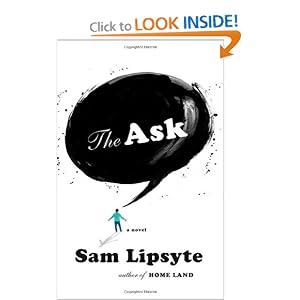 Amazon.com Review Amazon Best Books of the Month, March 2010: How can a life so miserable be so funny? Is it because the stakes are so low (Milo Burke, the antihero of Sam Lipsyte’s novel, The Ask, is a failure at many things, but most prominently at his job of pulling in major donors for a deadwater arts program at a middling university neither you nor he care about), or because they are so high (among them death, love, and the general squandering of the glories of creation on trivia)? Lipsyte’s brilliant bile earned his previous novel, Home Land, one of the most passionate cult followings in recent years, and in The Ask that verbal invention is often the only thing that can rouse Milo and his peers from their ennui. They bait and badger each other and toss off complex cultural analyses to little effect, all the while haunted by the gap between wit and wisdom. Lipsyte manages to be both sour and tender to his characters, Milo in particular, whose barest shambles toward self-respect come to seem like the first baby steps of an honorable quest. --Tom Nissley From Publishers Weekly Starred Review. Lipsyte’s pitch-black comedy takes aim at marriage, work, parenting, abject failure (the author’s signature soapbox) and a host of subjects you haven’t figured out how to feel bad about yet. This latest slice of mucked-up life follows Milo Burke, a washed-up painter living in Astoria, Queens, with his wife and three-year-old son, as he’s jerked in and out of employment at a mediocre university where Milo and his equally jaded cohorts solicit funding from the Asks, or those who financially support the art program. Milo’s latest target is Purdy Stuart, a former classmate turned nouveau aristocrat to whom Milo quickly becomes indentured. Purdy, it turns out, needs Milo to deliver payments to Purdy’s illegitimate son, a veteran of the Iraq War whose titanium legs are fodder for a disgruntlement that makes the chip on Milo’s shoulder a mere speck of dust by comparison. Submission is the order of the day, but where Home Land had a working-class trajectory, this takes its tone of lucid lament to the devastated white-collar sector; in its merciless assault on the duel between privilege and expectation, it arrives at a rare articulation of empire in decline. (Mar.) Copyright © Reed Business Information, a division of Reed Elsevier Inc. All rights reserved.
 Ship Breaker [Hardcover]
 From School Library Journal Grade 7 Up-A fast-paced postapocalyptic adventure set on the American Gulf Coast. Nailer works light crew; his dirty, dangerous job is to crawl deep into the wrecks of the ancient oil tankers that line the beach, scavenging copper wire and turning it over to his crew boss. After a brutal hurricane passes over, Nailer and his friend Pima stumble upon the wreck of a luxurious clipper ship. It’s filled with valuable goods-a "Lucky Strike" that could make them rich, if only they can find a safe way to cash it in. Amid the wreckage, a girl barely clings to life. If they help her, she tells them, she can show them a world of privilege that they have never known. But can they trust her? And if so, can they keep the girl safe from Nailer’s drug-addicted father? Exciting and sometimes violent, this book will appeal to older fans of Scott Westerfeld’s "Uglies" series (S & S) and similar action-oriented science fiction.-Hayden Bass, Seattle Public Library, WA Copyright © Reed Business Information, a division of Reed Elsevier Inc. All rights reserved. From Booklist *Starred Review* This YA debut by Bacigalupi, a rising star in adult science fiction, presents a dystopian future like so many YA sf novels. What is uncommon, though, is that although Bacigalupi’s future earth is brilliantly imagined and its genesis anchored in contemporary issues, it is secondary to the memorable characters. In a world in which society has stratified, fossil fuels have been consumed, and the seas have risen and drowned coastal cities, Nailer, 17, scavenges beached tankers for scrap metals on the Gulf Coast. Every day, he tries to “make quota” and avoid his violent, drug-addicted father. After he discovers a modern clipper ship washed up on the beach, Nailer thinks his fortune is made, but then he discovers a survivor trapped in the wreckage-the “swank” daughter of a shipping-company owner. Should he slit the girl’s throat and sell her for parts or take a chance and help her? Clearly respecting his audience, Bacigalupi skillfully integrates his world building into the compelling narrative, threading the backstory into the pulsing action. The characters are layered and complex, and their almost unthinkable actions and choices seem totally credible. Vivid, brutal, and thematically rich, this captivating title is sure to win teen fans for the award-winning Bacigalupi. Grades 8-12. --Lynn Rutan
 So Cold the River [Hardcover]
 Amazon.com Review Amazon Best Books of the Month, June 2010: Award-winning author Michael Koryta’s first foray into the supernatural genre is spellbinding and check-your-doors-and-windows scary, and it all begins with a check and a bottle of water. Filmmaker Eric Shaw had a knack for getting the exact right shot--an unexplained tug that unerringly put him on the right path--until his temper killed his Hollywood career. He gets a shot at redemption when a wealthy young woman commissions a video tribute for her father-in-law, a dying millionaire named Campbell Bradford. A man with a shady past, a town with a rich history, and an antique bottle of water claiming to "cure all ills" lead Shaw to small town West Baden, where things quickly go sideways. Shaw finds himself at odds with Bradford’s only surviving family, a bitter and violent great-grandson named Josiah, and that once familiar tug of Shaw’s becomes something darker and more dangerous. At its deliciously creepy core, So Cold the River is about two men facing down their demons, and what happens when those demons fight back. --Daphne Durham From Publishers Weekly Starred Review. In this explosive thriller from Koryta (Envy the Night), failed filmmaker Eric Shaw is eking out a living making family home videos when a client offers him big bucks to travel to the resort town of West Baden, Ind., the childhood home of her father-in-law, Campbell Bradford, to shoot a video history of his life. Almost immediately, things go weird. Eric uncovers evidence of another Campbell Bradford, a petty tyrant who lived a generation before the other and terrorized the locals. The older Campbell begins appearing in horrific visions to Eric after he sips the peculiar mineral water that made West Baden famous. Koryta spins a spellbinding tale of an unholy lust for power that reaches from beyond the grave and suspends disbelief through the believable interactions of fully developed characters. A cataclysmic finale will put readers in mind of some of the best recent works of supernatural horror, among which this book ranks. 6-city author tour. (June) Copyright © Reed Business Information, a division of Reed Elsevier Inc. All rights reserved.
 Anthropology of an American Girl: A Novel [Deckle Edge] [Hardcover]
 Amazon.com Review Amazon Best Books of the Month, June 2010: Eveline Auerbach, the heroine of Anthropology of an American Girl, observes at one point that "pain becomes its own story." That may be the best way to begin talking about Hilary Thayer Hamann’s arresting and provocative coming-of-age novel, set against the twilight years of Eveline’s adolescence and the dawn of the 1980s--a decade made all the more infamous by books like American Psycho and Bright Lights, Big City. Hamann’s 600-page epic is a worthy and welcome successor to those novels, as it charts the wistful and unsteady course of a girl experiencing the often brutal paradox of being a woman. Eveline is a curious soul. Much of her story unfolds in interior monologues that display how acutely--and how honestly--she observes herself and the men who lay claim to her, and no thought of hers is left unturned: she reflects with great tenderness both the guileless narcissism and the strange liberty of being young. Anthropology of an American Girl is an accomplished and absorbing work of fiction, resonant and romantic in the grandest sense, that will remind you what a great American novel really is. --Anne Bartholomew From Publishers Weekly Starred Review. If publishers could figure out a way to turn crack into a book, it’d read a lot like this. Originally a self-published cult hit in 2003 (since reedited), Hamann’s debut traces the sensual, passionate, and lonely interior of a young woman artist growing up in windswept East Hampton at the end of the 1970s. The book begins as a two-pronged tragedy befalls 17-year-old narrator Eveline: her best friend’s mother (more maternal than her own) dies, and Eveline is raped by two high school students. Her brutalized interior, exquisitely rendered by Hamann, leads Eveline to a series of self-realizations that bears obvious comparison to that iconic nonconformist Holden Caulfield. The difference, though, is Eveline’s femininity threatens to subsume her fragility. Over the course of the book, she falls deeply in love with a stormy figure who helps bring her to disturbing conclusions. Eveline-bent on self-destruction but capable of deep passion, stifled by circumstance but constantly blossoming-is a marvelously complex and tragic figure of disconnection, startlingly real and exposed at all times. (May) Copyright © Reed Business Information, a division of Reed Elsevier Inc. All rights reserved.
 A Visit from the Goon Squad [Hardcover]
 From Publishers Weekly Starred Review. Readers will be pleased to discover that the star-crossed marriage of lucid prose and expertly deployed postmodern switcheroos that helped shoot Egan to the top of the genre-bending new school is alive in well in this graceful yet wild novel. We begin in contemporaryish New York with kleptomaniac Sasha and her boss, rising music producer Bennie Salazar, before flashing back, with Bennie, to the glory days of Bay Area punk rock, and eventually forward, with Sasha, to a settled life. By then, Egan has accrued tertiary characters, like Scotty Hausmann, Bennie’s one-time bandmate who all but dropped out of society, and Alex, who goes on a date with Sasha and later witnesses the future of the music industry. Egan’s overarching concerns are about how rebellion ages, influence corrupts, habits turn to addictions, and lifelong friendships fluctuate and turn. Or as one character asks, How did I go from being a rock star to being a fat fuck no one cares about? Egan answers the question elegantly, though not straight on, as this powerful novel chronicles how and why we change, even as the song stays the same. (June) Copyright © Reed Business Information, a division of Reed Elsevier Inc. All rights reserved. Review “Pitch perfect. . . . Is there anything Egan can’t do in this mash-up of forms? Write successfully in the second person? Check. Parody celebrity journalism and David Foster Wallace at the same time? Check. Make a moving narrative out of a PowerPoint presentation? Check. . . . Although shredded with loss, A Visit From the Goon Squad is often darkly, rippingly funny. Egan possesses a satirist’s eye and a romance novelist’s heart. . . . No one is beyond the pale of her affection; no one is spared lampooning. . . . For a book so relentlessly savvy about the digital age and its effect on how we experience time (speeded up, herky-jerky, instantaneous, but also full of unbearable gaps and pauses), A Visit From the Goon Squad is remarkably old-fashioned in its obsession with time’s effects on characters, that preoccupation of those doorstop 19th-century novels.” -Will Blythe, The New York Times Book Review (cover review) “If Jennifer Egan is our reward for living through the self-conscious gimmicks and ironic claptrap of postmodernism, then it was all worthwhile. . . . A deeply humane story about growing up and growing old in a culture corroded by technology and marketing. . . . [A] triumph of technical bravado and tender sympathy. . . . Here, in ways that surprise and delight again, she transcends slick boomer nostalgia and offers a testament to the redemptive power of raw emotion in an age of synthetic sound and glossy avatars. Turn up the music, skip the college reunion and curl up with The Goon Squad instead.” -Ron Charles, The Washington Post “It may be the smartest book you can get your hands on this summer.” -Carolyn Kellogg, The Los Angeles Times “[A] spiky, shape-shifting new book. . . . A display of Ms. Egan’s extreme virtuosity.” -Janet Maslin, The New York Times “Jennifer Egan is a rare bird: an experimental writer with a deep commitment to character, whose fiction is at once intellectually stimulating and moving. . . . It’s a tricky book, but in the best way. When I got to the end, I wanted to start from the top again immediately, both to revisit the characters and to understand better how the pieces fit together. Like a masterful album, this one demands a replay.” -Malena Watrous, The San Francisco Chronicle “For all its postmodern flourishes, Goon Squad is as traditional as a Dickens novel. . . . Her aim is not so much to explode traditional storytelling as to explore how it responds to the pressures and opportunities of the digital age. Egan herself does not appear to be on Facebook, but A Visit From the Goon Squad will likely make her many new friends.” -Jennie Yabroff, Newsweek “Jennifer Egan’s A Visit from the Goon Squad is a singular work of fiction in both senses of the word. It’s as if the author has taken an epic novel covering five decades and expertly filleted it, casting aside excess characters and years to come away with a narrative that is wide-ranging but remarkably focused. . . . Vibrant and winning. . . . While this is occasionally a wistful book, it isn’t’ sad. Each narrative disorientation and subsequent reorientation reminds us of how we weave in and out of one another’s lives, staying connected through memory-our shield against the goon squad. By the time we get to the last page of Egan’s book . . . we’re left wanting more.” -Marty Pols, Time “Clever. Edgy. Groundbreaking. . . . For all of its cool, languid, arched-eyebrow sophistication-that’s the part that will make you think ‘Didion’-and for all of the glitteringly gorgeous sentences that flit through its pages like exotic fish-that’s the DeLillo part-the novel is actually a sturdy, robust, old-fashioned affair. It features characters about whom you come to care deeply as you watch them doing things they shouldn’t, acting gloriously, infuriatingly human.” -Julia Keller, The Chicago Tribune “Jennifer Egan has accomplished the tricky feat of using metafiction techniques without sacrificing old-fashioned story-telling. . . . A Visit from the Goon Squad has a circuitous structure that seems almost designed for our Internet rewired brains.” -Steven Kurutz, The Wall Street Journal “Expect to inhale Jennifer Egan’s A Visit From the Goon Squad. Then expect it to lodge in your cranium and your breastbone a good long while. I expect this brilliant, inventive novel to become enshrined. Such rash speculation is foolish, I know-we live amid a plague of bloated praise. But A Visit From the Goon Squad is emboldening. It cracks the world open afresh . . . Would that Marcel Proust could receive A Visit From the Goon Squad. It would blow his considerable mind.” -Karen R. Long, Cleveland Plain Dealer “Expect to inhale Jennifer Egan’s A Visit From the Goon Squad. Then expect it to lodge in your cranium and your breastbone a good long while. I expect this brilliant, inventive novel to become enshrined. Such rash speculation is foolish, I know-we live amid a plague of bloated praise. But A Visit From the Goon Squad is emboldening. It cracks the world open afresh . . . Would that Marcel Proust could receive A Visit From the Goon Squad. It would blow his considerable mind.” -Karen R. Long, Cleveland Plain Dealer “In her audacious, extraordinary fourth novel, A Visit from the Goon Squad, Jennifer Egan uses the pop-music business as a prism to examine the heedless pace of modern life, generational impasses, and the awful gravity of age and entropy. . . . A Visit from the Goon Squad is fascinating for its daring scope and fractured narrative, but along the way, Egan crafts some brilliant scenes. . . . A rich and rewarding novel.” -David Hiltbrand, Philadelphia Inquierer “Grounded in the passions and frustrations of a record producer and his nervy assistant, Jennifer Egan’s bravura fifth book, A Visit from the Goon Squad, samples from different eras (the glory days of punk; a slick, socially networked future) and styles (sly satire, moving tragedy, even PowerPoint) to explore the interplay between music and the rough rhythms of life.” -Megan O’Grady, Vogue “Wildly ambitious. . . . A tour de force. . . . Music is both subject and metaphor as Egan explores the mutability of time, destiny, and individual accountability post-technology.” -Liza Nelson, O, The Oprah Magazine “A Visit from the Goon Squad [is] an exhilarating, big-hearted, three-headed beast of a story. . . . [A] genius as a writer. . . . We see ourselves in all of Egan’s characters because their stories of heartbreak and redemption seem so real they could be our own, regardless of the soundtrack. Such is the stuff great novels are made of.” -Kimberly Cutter, Marie-Claire “[Egan is] a boldly intellectual writer who is not afraid to apply her equally powerful intuitive skills to her ambitious projects. . . . While it’s a time-trekking, tech-freakin’ doozie, the characters’ lives and fates claim the story first and foremost, and we are pulled right in. . . . Brilliantly structured, with storylike chapters.” -Lisa Shea, Elle “[A] slamming multi-generational San Francisco family saga.” -Elissa Schappell, Vanity Fair “Frequently dazzling. . . . Egan’s expert flaying of human foibles has the compulsive allure of poking at a sore tooth: excruciating but exhilarating too. A-” -Leah Greenblatt, Entertainment Weekly “Remarkable . . . A finely braided meditation on time, memory, pop culture, and the perils of growing up in America.” -Paul Vidich, Narrative Magazine “Poignant. . . . A nice reminder that even in the age of Kindles and Facebook, ambitious fiction is still one of the best tools available to help us understand the rapidly changing world. . . . Her startling, apocalyptic take on the near future is all the more chilling for its utter plausibility, and brings the realization that Egan was up to much more here than just trying to reinvent the novel’s format. You’ll want to recommend it to all your Facebook friends.” -Patrick Condon, Associated Press “Forget what literati the world over say about the demise of the “big” novel, the kind that patiently threads its way through the tangled knot of humankind’s shared urges, fears, frailties and joys. A Visit from the Goon Squad admittedly cannot be described either as a novel or a collection of short stories, but it is a great work of fiction, a profound and glorious exploration of the fullness and complexity of the human condition. . . . An extraordinary new work of fiction.” -Rayyan Al-Shawaf, The New York Press “Poetry and pathos . . . Egan conveys personality so swiftly and with such empathy. . . . Yet she is not a conventional dystopian novelist; distinctions between the virtual and the real may be breaking down in this world, but her characters have recognizable emotions and convictions, which is why their compromises and uncertainties continue to move us. . . . Another ambitious change of pace from talented and visionary Egan, who reinvents the novel for the 21st century while affirming its historic values.” -Kirkus Reviews (starred review) “Egan is a writer of cunning subtlety, embedding within the risky end...
 Major Pettigrew's Last Stand: A Novel [Hardcover]
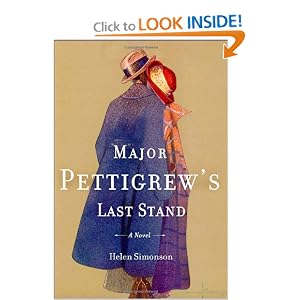 Amazon.com Review Amazon Best Books of the Month, March 2010: In her witty and wise debut novel, newcomer Helen Simonson introduces the unforgettable character of the widower Major Ernest Pettigrew. The Major epitomizes the Englishman with the "stiff upper lip," who clings to traditional values and has tried (in vain) to pass these along to his yuppie son, Roger. The story centers around Pettigrew’s fight to keep his greedy relatives (including his son) from selling a valuable family heirloom--a pair of hunting rifles that symbolizes much of what he stands for, or at least what he thinks he does. The embattled hero discovers an unexpected ally and source of consolation in his neighbor, the Pakistani shopkeeper Jasmina Ali. On the surface, Pettigrew and Ali’s backgrounds and life experiences couldn’t be more different, but they discover that they have the most important things in common. This wry, yet optimistic comedy of manners with a romantic twist will appeal to grown-up readers of both sexes. Kudos to Helen Simonson, who distinguishes herself with Major Pettigrew’s Last Stand as a writer with the narrative range, stylistic chops, and poise of a veteran. --Lauren Nemroff From Publishers Weekly In her charming debut novel, Simonson tells the tale of Maj. Ernest Pettigrew, an honor-bound Englishman and widower, and the very embodiment of duty and pride. As the novel opens, the major is mourning the loss of his younger brother, Bertie, and attempting to get his hands on Bertie’s antique Churchill shotgun-part of a set that the boys’ father split between them, but which Bertie’s widow doesn’t want to hand over. While the major is eager to reunite the pair for tradition’s sake, his son, Roger, has plans to sell the heirloom set to a collector for a tidy sum. As he frets over the guns, the major’s friendship with Jasmina Ali-the Pakistani widow of the local food shop owner-takes a turn unexpected by the major (but not by readers). The author’s dense, descriptive prose wraps around the reader like a comforting cloak, eventually taking on true page-turner urgency as Simonson nudges the major and Jasmina further along and dangles possibilities about the fate of the major’s beloved firearms. This is a vastly enjoyable traipse through the English countryside and the long-held traditions of the British aristocracy. (Mar.) Copyright © Reed Business Information, a division of Reed Elsevier Inc. All rights reserved.
 The Lonely Polygamist by Brady Udall
 While Big Love seeks the inherent soap opera in a man with many wives, in The Lonely Polygamist Brady Udall finds the slapstick. But Udall doesn’t settle just for jokes (though the jokes are excellent). Golden may be hapless, distracted, and deceitful, but he is large-hearted and so is his story. With a fresh and faultless ear for American vernacular, Udall’s big tale of beset manhood effortlessly earns its comparisons to tragicomic family classics from The Corrections to John Irving. read more
Just Kids by Patti Smith
 Patti Smith and Robert Mapplethorpe weren’t always famous, but they always thought they would be. They found each other on the streets of New York City in the late ’60s and made a pact to keep each other afloat until they found their voices--or the world was ready to hear them. Smith’s memoir of their friendship, Just Kids, is tender and artful, with the oracular style of her punk anthems balanced by her memory for everyday details like the price of Automat sandwiches and the shabby, welcoming fellow bohemians of the Chelsea Hotel.read more
The Immortal Life of Henrietta Lacks by Rebecca Skloot
Henrietta Lacks was a mother of five who died from a cruelly aggressive cancer at the age of 30 in 1951. A sample of her tissue turned out to provide one of the holy grails of mid-century biology: human cells that could survive--even thrive--in the lab. Their stunning potency became a building block for countless breakthroughs, including the cure for polio. For a decade, Rebecca Skloot doggedly but compassionately gathered the threads of Henrietta’s story, fashioning in The Immortal Life of Henrietta Lacks a rich and haunting tale that redefines what it means to have a medical history.
The Imperfectionists by Tom Rachman
Printing presses whirr, ashtrays smolder, and the endearing complexity of humanity plays out in Tom Rachman’s debut novel, The Imperfectionists. The chaos of a fictional English-language newspaper provides a stage for characters unified by a common thread of circumstance, but Rachman’s depiction of a paper deemed a "daily report on the idiocy and the brilliance of the species" becomes more about the disillusion in everyday life than the dissolution of an industry.
Matterhorn by Karl Marlantes
Matterhorn is a marvel--a living, breathing book with Lieutenant Waino Mellas and the men of Bravo Company at its raw and battered heart. Mellas is a bundle of anxiety and ambition, a college kid who realized too late that "because of his desire to look good coming home from a war, he might never come home at all." A highly decorated Vietnam veteran himself, Karl Marlantes brings the horrors and heroism of war to life with the finesse of a seasoned writer, exposing not just the things they carry, but the fears they bury, the friends they lose, and the men they follow. read more
The Big Short by Michael Lewis
Though many at its center have argued that no one saw the economic meltdown coming, Michael Lewis, with his unerring instinct for the under-reported story, has found a handful of people who did, and who made a whole of money doing so. Following the people who knew what was happening turns out to be brilliant way to explain the inexplicable, and in The Big Short he makes an entertaining and enlightening return to high finance over 20 years after Liar’s Poker, with the same sharp eye for great character and contrarian ideas as more recent favorites like Moneyball and The Blind Side.
The Girl Who Kicked the Hornet's Nest by Stieg Larsson
A familiar evil lies in wait for Lisbeth Salander in the finale to Stieg Larsson’s Millennium Trilogy, but this time her only choice is to take it down or be destroyed by it. Her survival depends on journalist Mikael Blomkvist, and in spite of her most feral instincts, she must trust his judgment when the stakes are highest. The Girl Who Kicked the Hornet’s Nest is the finest example of a book that saves the best for last: it roars with an explosive storyline filled with neck-snapping revelations that make the ending of this phenomenal, game-changing suspense series all the more bittersweet. read more
Country Driving by Peter Hessler
In the superb Country Driving, Peter Hessler has observed the past 15 years of change in China with the patience and perspective--and necessary good humor--of an outsider who expects to be there for a while. He takes to the roads, as so many Chinese are doing now for the first time, driving on dirt tracks to the desert edges of the ancient empire and on brand-new highways to the mushrooming factory towns of the globalized boom. He’s an utterly enjoyable guide, with a humane and empathetic eye for the ambitions, the failures, and the comedy of a country in which everybody, it seems, is on the move.
The Irresistible Henry House by Lisa Grunwald
To the ranks of iconic mid-century modern men Gump and Garp, add Lisa Grunwald’s The Irresistible Henry House. Henry arrives in the world as a "practice baby," passed between a dozen young women at the Practice House of Wilton College’s Home Economics program in a decidedly pre-Spock era that discouraged mothers from holding babies "too much." From the beginning, Henry inspires in women the desire for his exclusive attention. But what propels this fascinating story is Henry’s struggle to define the desires of his own heart, while the women who love him forge their own identities in the crucible of the 20th century’s sexual revolution. read more
The Passage by Justin Cronin
Justin Cronin’s gorgeous writing brings depth and vitality to this ambitious, terrifying epic about a virus that nearly destroys the world. The Passage takes readers on a journey from the early days of the virus to the aftermath of the destruction, where packs of hungry infected scour the razed, charred cities looking for food, and the survivors eke out a bleak, brutal existence. Cronin doesn’t shy away from identifying his "virals" as vampires, but they’re a far cry from the angsty, romantic types you might expect, and they’re inextricably linked to the one girl who could destroy them all. The Passage is a grand mashup of literary and supernatural, a stunning beginning to a trilogy that is sure to dazzle readers of both genres.
Globe Trekker - Indonesia (Double DVD)
3 Episodes: Bali & Sulawesi, Java & Sumatra, and The Eastern Islands. Thirteen thousand floating emerald islands make up the Indonesian archipelago stretching 3,000 miles from Asia to teh Pacific. With a population of 175 million, it's the world's largest Moslem nation and one of the most culturally diverse regions in the world. Joing travelers Megan McCormick, Shilpa Mehta and Mark Crowdy as they visit the archipelagos major islands of Bali, Sulawesi, Java, Sumatra, Lombok, Komodo and Flores. Along the way... Relax with a massage on Kuta Beach. Take part in Bali's New Year celebrations. Come face to face with a Komodo Dragon. Marvel at the dramatic Sulphuric lakes in Flores. Climb the Anak Krakatau volcano - The site of one of the world's most violent eruptions.
In the Time of Madness: Indonesia on the Edge of Chaos (Paperback)
Between 1996 and 1999, British foreign correspondent Parry repeatedly forayed into some of the worst strife rending the islands of Indonesia, a nation emerging tumultuously from the dictatorship of General Suharto. This boldly reported, introspective account—"a book about violence, and about being afraid"—is his attempt to make sense, however incompletely, of what happened in Java, Borneo and East Timor. In Borneo, Parry saw seven decapitated heads, among other horrors, when he went to report on "an ethnic war of scarcely imaginable savagery." He witnessed the collapse of the rupiah and the 1998 mass student protests in Jakarta on the occasion of Suharto's reappointment. As the East Timorese agitated for independence from Indonesian rule, Parry ventured into the East Timor jungle to meet with rebels. And when the independence referendum soon thereafter brought Indonesia's military might down on East Timor, a Portuguese colony until 1975, Parry holed up in the U.N. compound at the vortex of the violence. He laments his self-protecting decision to leave the compound, though, comparing himself unfavorably to fearless Polish journalist Ryszard Kapuscinski—"doused in benzene at the burning roadblocks." Holding Parry's writing to Kapuscinski's gold standard reveals it to be a little light on analysis and heavy on self-reflection, though it is clipped, vivid and honest. (Jan.)
Copyright © Reed Business Information, a division of Reed Elsevier Inc. All rights reserved. --This text refers to an out of print or unavailable edition of this title.
Copyright © Reed Business Information, a division of Reed Elsevier Inc. All rights reserved. --This text refers to an out of print or unavailable edition of this title.
The Indonesia Reader: History, Culture, Politics (The World Readers) (Paperback)
Editors Hellwig (Asian studies, Univ. of British Columbia; In the Shadow of Change: Images of Women in Indonesian Literature) and Tagliacozzo (history & Asian studies, Cornell Univ.; Secret Trades, Porous Borders: Smuggling and States Along a Southeast Asian Frontier, 1865–1915) here introduce the understudied nation of Indonesia. Reading their book is like exploring an eclectic, brightly colored museum—and leaving with a multifaceted understanding of one nation's history and cultures. The book is chronologically organized into ten sections, each beginning with an introduction by the editors and then providing ten to 12 engaging pieces relating to the time period. The primary sources included here are the book's gems; they range from fifth-century stone pillars and writings by travelers throughout many centuries to fiction, newspaper articles, manifestos, and more in the 20th and 21st centuries. Unfortunately, there are a couple of minor drawbacks. First, the introductions do not always provide background on the applicable author's affiliations. Second, both Indonesian words and social science terms need definitions. Finally, future versions of this book would benefit from suggestions for additional reading. Recommended for all students of Asian studies.—Karen Sobel, Univ. of Denver Lib.
"Tineke Hellwig and Eric Tagliacozzo have woven together a variety of observations across time to help gain some insight into the astonishingly varied story of a fascinating nation. From reflections on the role of inter-oceanic trade, the flow of world religions, the fight for independence, and ultimately, a just society, the book offers a key corpus of documents to debate and contextualize." Michael Laffan, Princeton University "With selections including scholarly pieces, manifestoes, interviews, speeches, and inscriptions, this volume captures the long sweep of the Indonesian archipelago's history while emphasizing its spectacular diversity. This is a Reader that deserves to be read."--Rudof Mrazek, University of Michigan
The Indonesia Reader: History, Culture, Politics (The World Readers)
"Tineke Hellwig and Eric Tagliacozzo have woven together a variety of observations across time to help gain some insight into the astonishingly varied story of a fascinating nation. From reflections on the role of inter-oceanic trade, the flow of world religions, the fight for independence, and ultimately, a just society, the book offers a key corpus of documents to debate and contextualize." Michael Laffan, Princeton University "With selections including scholarly pieces, manifestoes, interviews, speeches, and inscriptions, this volume captures the long sweep of the Indonesian archipelago's history while emphasizing its spectacular diversity. This is a Reader that deserves to be read."--Rudof Mrazek, University of Michigan
The Indonesia Reader: History, Culture, Politics (The World Readers)
Indonesia (Country Guide) (Paperback)
I'm at the end of my 4 months living in Jakarta. I bought this book in the states before going but when I arrived in Jakarta, i was originally very disappointed by the thinness of the jakarta section. The lack of depth was a problem throughout the book. However, I later traveled to Yogjakarta, Bandung, Bogor, Bali, Lombok, and the Gili Islands, making this book actually pretty useful. Although it doesn't have extensive information on each area, it does cover a lot of areas in a good-enough way.
However.. since the vast majority of people who come to Indonesia do not actually travel to many different places (usually just around Bali, or Java), I would recommend a book which focuses more on the place you will actually go, since you are otherwise paying for and carrying around a lot more bulk than is necessary.
(Update 2009): Last summer, i spent another 2 months in Indonesia during which I was based in Yogyakarta. I again had the great opportunity of doing a lot of internal traveling, particularly within Java. I would like to again say that this book has a huge breadth of knowledge about soo many different amazing places way off of the beaten track of Bali. My indonesian girlfriend had not even heard of many of them... i was able to really get in touch - a deep touch - with indonesia.
However.. since the vast majority of people who come to Indonesia do not actually travel to many different places (usually just around Bali, or Java), I would recommend a book which focuses more on the place you will actually go, since you are otherwise paying for and carrying around a lot more bulk than is necessary.
(Update 2009): Last summer, i spent another 2 months in Indonesia during which I was based in Yogyakarta. I again had the great opportunity of doing a lot of internal traveling, particularly within Java. I would like to again say that this book has a huge breadth of knowledge about soo many different amazing places way off of the beaten track of Bali. My indonesian girlfriend had not even heard of many of them... i was able to really get in touch - a deep touch - with indonesia.
Bisnis Indonesia [Magazine Subscription]
majalah bisnis indonesia minggu diterbitkan oleh PT Gramedia.
18 Jurus Sakti Dewa Mabuk Membangun Bisnis: Buku Bisnis Pertama Bergaya Cerita Silat (Indonesian Edition)
Buku yang mampu memberi inspirasi dan membuka wawasan Anda agar lebih inovatif. Dari hasil pengalaman nyata dan satu-satunya di Indonesia.
ENDORSER
“Dengan Jurus Dewa Mabuk, Es Teler 77 Jaya di Dunia”
Gus Dur, mantan Presiden RI ke-4
“Kita harus angkat topi pada Sukyatno Nugroho yang berani memelopori franchise dengan brand Indonesia sendiri dan mengembangkannya ke mana-mana.”
Hermawan Kartajaya, Chief Service Officer MarkPlus&Co
“Sementara begitu banyak insan Indonesia gelisah mencari lapangan kerja, Sukyatno justru menciptakan lapangan kerja secara mandiri bukan untuk dirinya saja namun bagi ratusan bahkan ribuan sesama warga Indonesia lainnya.”
Dr. Jaya Suprana, Presdir PT Jamu Jago, Semarang
“Saya mengucapkan selamat kepada Saudara Sukyatno Nugroho yang bagaikan David kecil mungil berjuang di pasar yang sudah menjadi ajang produk Multi National Corporation yang sudah melanda konsumen Indonesia.”
Christianto Wibisono
ENDORSER
“Dengan Jurus Dewa Mabuk, Es Teler 77 Jaya di Dunia”
Gus Dur, mantan Presiden RI ke-4
“Kita harus angkat topi pada Sukyatno Nugroho yang berani memelopori franchise dengan brand Indonesia sendiri dan mengembangkannya ke mana-mana.”
Hermawan Kartajaya, Chief Service Officer MarkPlus&Co
“Sementara begitu banyak insan Indonesia gelisah mencari lapangan kerja, Sukyatno justru menciptakan lapangan kerja secara mandiri bukan untuk dirinya saja namun bagi ratusan bahkan ribuan sesama warga Indonesia lainnya.”
Dr. Jaya Suprana, Presdir PT Jamu Jago, Semarang
“Saya mengucapkan selamat kepada Saudara Sukyatno Nugroho yang bagaikan David kecil mungil berjuang di pasar yang sudah menjadi ajang produk Multi National Corporation yang sudah melanda konsumen Indonesia.”
Christianto Wibisono
Subscribe to:
Posts (Atom)